

Hilti & Beyond: Exploring Modular Support Systems for Trades

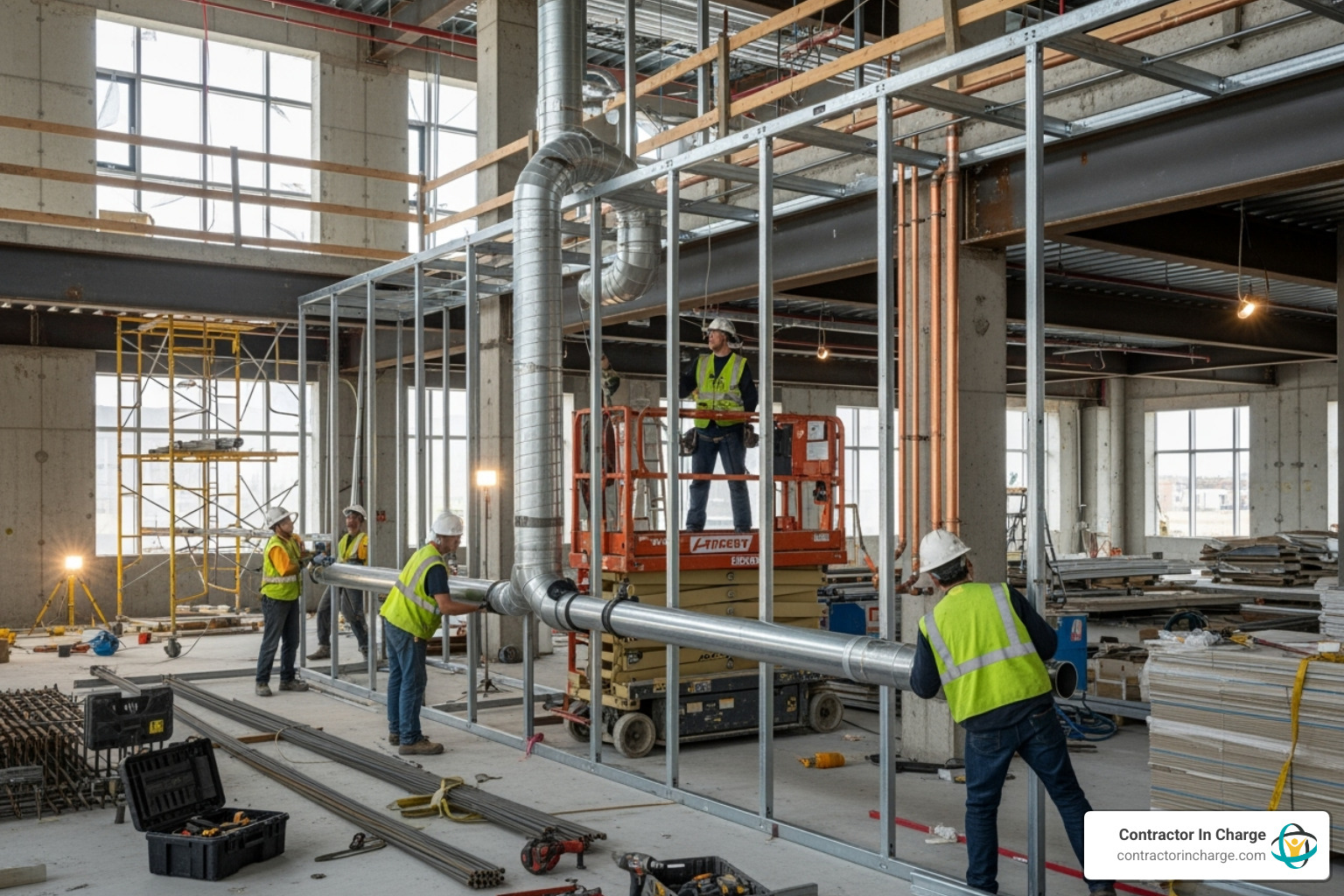
Why Modular Support Matters for Your Trade Business
Modular support packages for trades represent two critical approaches to building efficiency: physical support systems for job sites and operational support packages for back-office functions. Here’s a brief overview:
Physical Modular Support Systems:
- Pre-engineered, bolted metal framing systems for supporting pipes, ducts, and equipment.
- Install 300-500% faster than traditional welded structures.
- Eliminate welding and hot work permits.
- Enable off-site prefabrication to reduce on-site labor.
Business Support Packages:
- Outsourced services for call handling, dispatching, bookkeeping, and more.
- Scale up or down based on your business needs.
- Reduce overhead while improving customer service.
- Allow you to focus on fieldwork instead of administrative tasks.
Both types share the same principle: modularity creates flexibility, saves time, and reduces costs by letting you select only what you need.
I’m Anna Lynn Wise. With over fifteen years in operations for a major trade company, I’ve seen how both physical and operational modular support packages for trades can transform a struggling business. At Contractor In Charge, I now help service business owners implement these modular approaches to streamline their operations and reclaim their time.
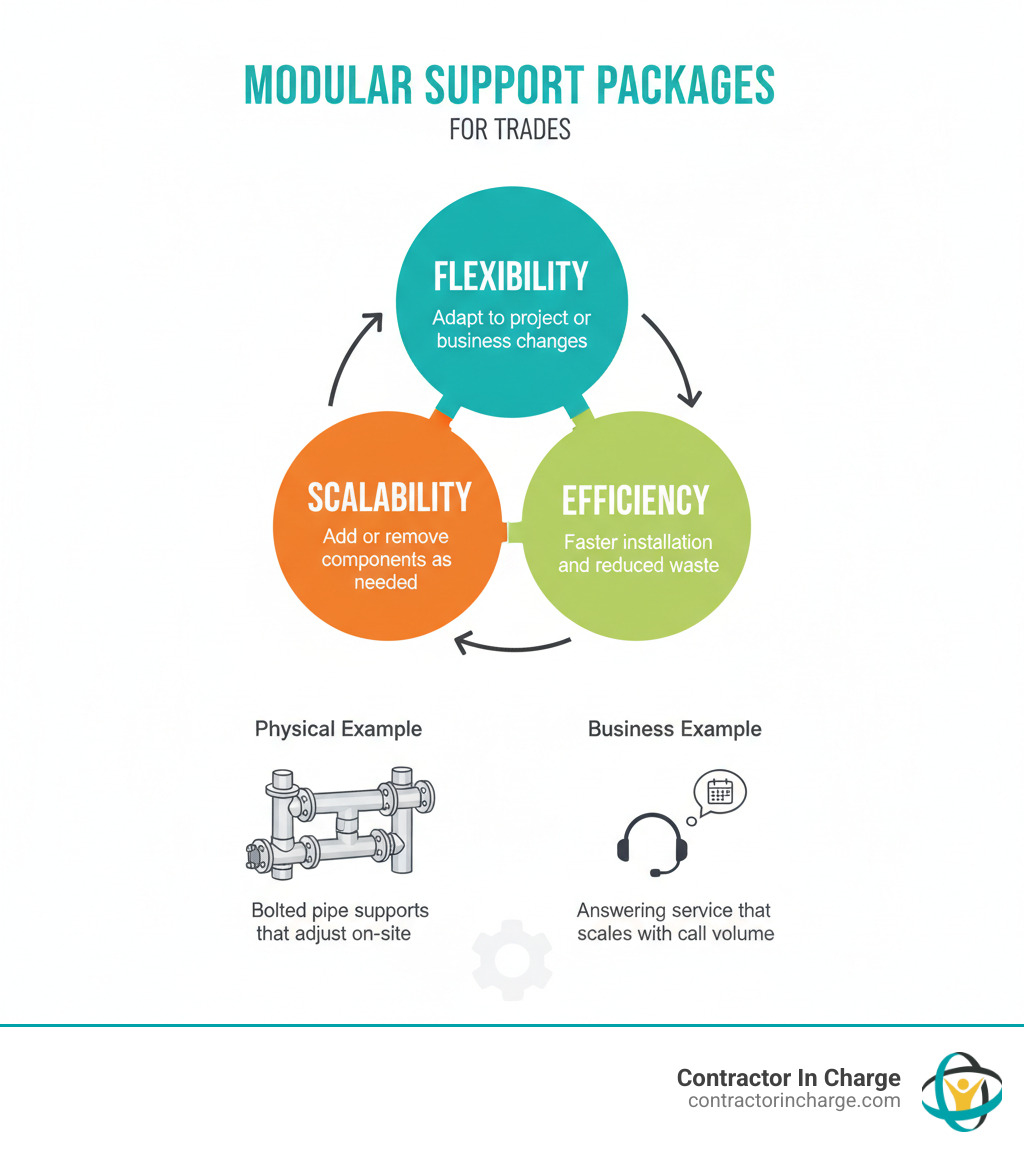
The Foundation: Physical Modular Support Systems in Construction
On the job site, modular support packages for trades refer to pre-engineered components that bolt together to support pipes, ducts, and cables. Instead of slow, traditional on-site welding, these systems are like sophisticated building blocks that assemble in a fraction of the time, finishing in hours what used to take days.
These systems are particularly effective in mechanical, electrical, and plumbing (MEP) applications. Multi-Trade Racks (MTRs) can even combine several services into a single, pre-engineered structure. The biggest advantage is prefabrication: large sections can be built off-site in a controlled environment and delivered ready to install. This reduces on-site chaos and helps keep projects on schedule. For more details, you can explore Support Systems from industry leaders.
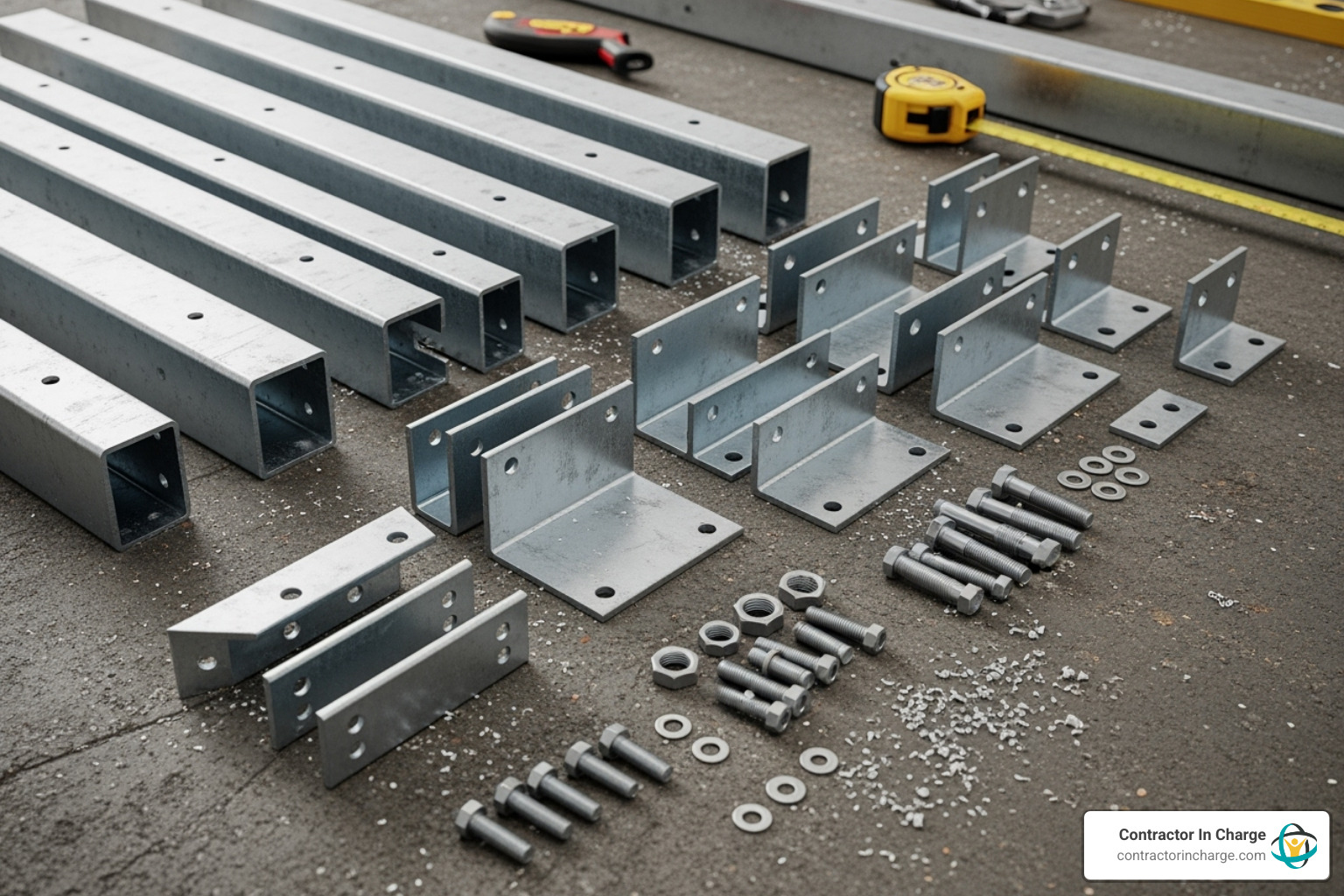
Key Components and Materials
Modular systems are built from a few key components. Profiles form the backbone, with open C-Channels for lighter applications and closed box profiles (girders) for heavy loads. Connectors link profiles at various angles, while baseplates anchor the entire system to the building’s structure. Fasteners are what make the “all-bolted” concept work, using specialized bolts like thread-forming or twist-lock mechanisms to create strong connections without welding.
Material quality is crucial. Most systems use high-grade steel with corrosion protection. Electro-Galvanized (EG) finishes are suitable for dry, indoor environments. For outdoor or more demanding conditions, Hot-Dipped Galvanized (HDG) offers better protection. The most advanced option, Zinc Magnesium (ZM) coating, provides premium protection for outdoor applications with moderate pollution (C3/C4 environments). Choosing the right finish ensures long-term reliability.
Traditional vs. Modular: A Comparative Analysis
Modular steel systems can be assembled 300-500% faster than traditional welded structures. This is because bolted connections eliminate the need for skilled welders, hot work permits, and lengthy safety monitoring.
- Safety: Modular systems eliminate burn risks, fire hazards, and toxic fumes associated with welding. Assembly can often happen at ground level, further reducing accident risk.
- Cost: Faster installation means lower labor costs. Material waste is minimized, and project delays are less frequent. While upfront component costs may seem higher, the total installed cost is typically lower.
- Flexibility: Welded structures are permanent. Modular systems can be easily adjusted, reconfigured, or even disassembled and reused elsewhere. This adaptability is invaluable when plans change or renovations are needed.
- Logistics: Prefabrication streamlines site operations. Assembled sections arrive just-in-time, reducing on-site clutter, material handling, and waste.
Design, Customization, and Planning
Modern modular support packages for trades are designed using sophisticated software that integrates with Building Information Modeling (BIM). Tools like Hilti’s PROFIS Modular Support Engineering software allow engineers to design and visualize complex systems with precision, ensuring a perfect fit.
Load-bearing calculations for static loads, seismic activity, and thermal expansion are handled automatically, eliminating guesswork and ensuring safety compliance. Despite being modular, systems are highly customizable during the design phase to meet project-specific needs. The software generates exact material lists, minimizing waste.
Many suppliers also offer Prefabrication Services, including pre-assembly, kitting, and precision cutting. This further reduces on-site labor and improves safety. Look for systems with certifications like ICC-ES ESR-5019 and relevant EN standards to ensure they meet rigorous safety and quality requirements.
Applications and Considerations for Physical Supports
Physical modular support packages for trades offer distinct advantages across various applications, from small commercial fit-outs to large industrial plants. Their versatility allows them to adapt to almost any environment, but selecting the right system for your specific conditions is key to success.
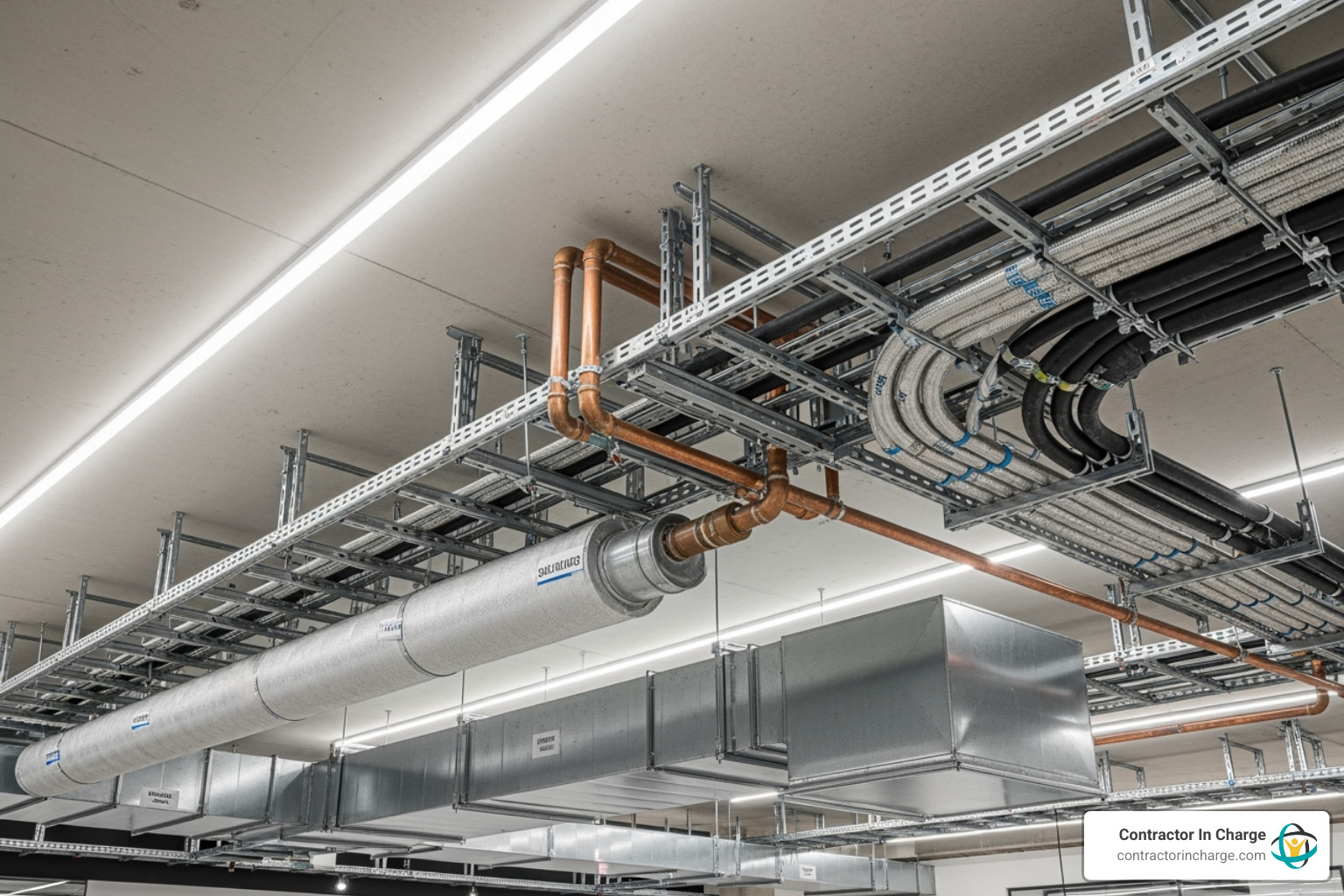
Which Trades Benefit Most?
While nearly every trade can use modular supports, some see transformative benefits.
- Mechanical and HVAC contractors find them ideal for supporting ductwork, chillers, air handlers, and complex pipe racks.
- Electrical contractors use them to create clean, organized, and adaptable pathways for cable trays and conduits.
- Plumbing contractors value the ease of creating supports for process, utility, and sprinkler systems, especially with pre-assembled riser racks that speed up installation.
- Specialized fields like medical facilities and industrial plants rely on them for weldless, configurable framing for everything from X-ray equipment to heavy-duty platforms, walkways, and pipe racks.
Essentially, any project requiring structural support can gain significant jobsite efficiency and safety improvements with these systems.
Selecting the Right System for Your Environment
Choosing the right modular system requires careful consideration of its operating environment to ensure long-term performance.
- Environmental Conditions: The environment dictates the material finish. Use basic Electro-Galvanized or Pre-Galvanized coatings for dry indoor spaces. For outdoor, humid, or polluted areas (classified as C3/C4 corrosion levels), you’ll need robust Hot-Dipped Galvanized (HDG) or Zinc Magnesium (ZM) coatings to prevent degradation.
- Load Requirements: Match components to the load. Lighter profiles work for simple applications, while medium-duty channels and heavy-duty closed girders are needed for multi-trade racks or large pipe supports. Always engineer for a capacity that exceeds anticipated loads.
- Maintenance and Reusability: Modular systems require less maintenance than welded structures but still need periodic inspections, especially in harsh environments. Their key advantage is adjustability. Unlike permanent welded systems, bolted components can be easily reconfigured or reused, offering best flexibility during installation and for future modifications.
Beyond the Job Site: Applying Modularity to Your Business Operations
We’ve seen how modular support packages for trades revolutionize construction sites, but the same principles can transform your back-office operations. Just as you bolt together steel components, you can assemble business services to create an operational support system that is efficient, scalable, and custom to your needs.
Every hour you or your technicians spend on administrative work—answering phones, scheduling jobs, sending invoices—is an hour you’re not earning revenue. Modular Outsourcing is the solution, providing a clear path to Business Growth and Efficiency.

What are modular support packages for trades businesses?
Modular support packages for businesses are a customizable menu of professional services that handle your administrative and operational tasks. Instead of hiring expensive, inflexible full-time staff for every role, you select specific “modules” of support that fit your current needs.
- A professional 24/7 call answering module, like our Answering Service, ensures you never miss a customer call and capture every lead.
- A dispatching module handles the complex logistics of getting the right technician to the right job at the right time, optimizing your team’s schedule and efficiency.
- Bookkeeping and administrative modules manage invoices, track expenses, and handle the small but time-consuming details that bog you down.
These services are scalable; you can add capacity during busy seasons and dial it back during slower times, aligning your costs with your revenue. This is one of the smartest Business Strategies for sustainable growth. As we always say, Outsourcing Lets You Focus on What You Do Best: the trade work that built your reputation.
The ROI of Modular Business Support
The financial case for modular business support is compelling, delivering a strong return on investment.
- Reduced Overhead: Convert the high fixed costs of a full-time employee (salary, benefits, insurance) into a flexible, variable expense that scales with your business.
- Improved Revenue: Professional Customer Service and call handling lead to higher booking rates. You capture jobs you might otherwise lose to competitors, directly boosting your bottom line.
- Better Cash Flow: Timely invoicing and systematic payment tracking from a bookkeeping service ensure you get paid faster, improving financial stability.
- Focus and Reduced Stress: Offloading administrative burdens allows your technicians to focus on billable work and gives you the mental space to think strategically. This reduces stress and prevents burnout.
Modular support helps you build a more profitable, professional, and sustainable business that works for you, not the other way around.
Building Your Ideal Stack: Customizing Modular Support Packages for Trades
The power of modular support packages for trades lies in their customization. You can handpick the services that solve your biggest challenges today and add more as you grow. This flexibility in Choosing the right Business Service mix is what makes the modular approach so practical for real-world contractors.
Instead of trying to do everything yourself or paying for a bloated full-service package, you build exactly what your business needs.
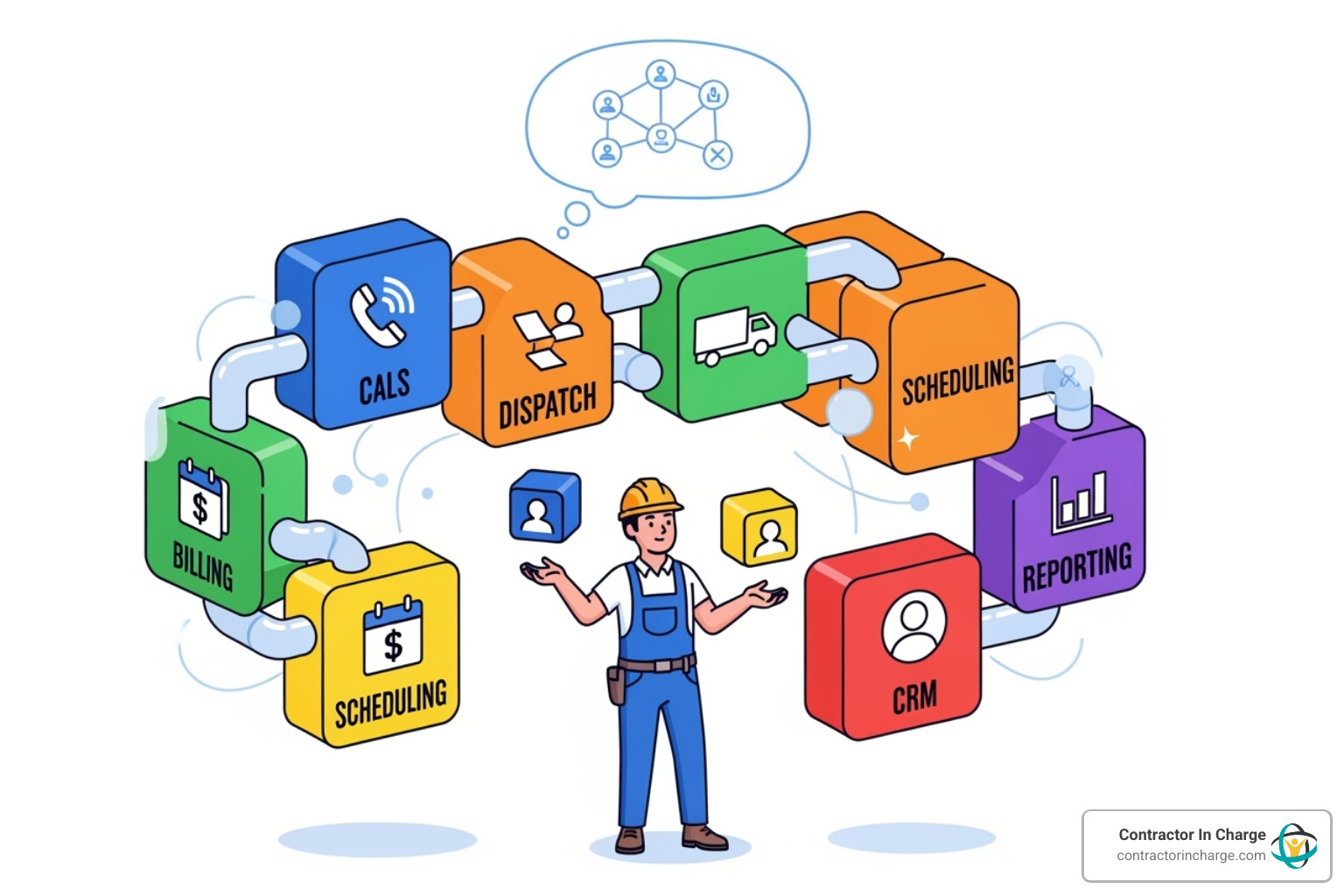
Core Modules: The Essentials for Every Contractor
Certain services form the foundation of a smooth-running trade business. These are the essential modules that keep your operations moving while you’re in the field.
- 24/7 Call Handling: This is where it all starts. A professional answering service ensures every call is answered by a real person, day or night, so you never miss a lead because you’re on a ladder or under a sink.
- Dispatch Scheduling: Good dispatching turns chaos into choreography. It coordinates your team efficiently, matching the right tech to the right job and optimizing routes to maximize billable hours.
- Customer Relationship Management (CRM) Integration: A CRM acts as your digital memory, tracking customer history and job details. Integrating it with your support services creates a seamless experience for your team and your customers. Our guide on How to Select a CRM Scheduling Software can help you choose the right one.
Growth Modules: Scaling Your Operations
Once your core operations are solid, you can add growth modules to expand and work smarter.
- Billing and Bookkeeping Services: As job volume grows, outsourcing financial tasks like invoicing, expense tracking, and payroll ensures accuracy and timeliness without pulling you from revenue-generating work.
- Marketing Support: A marketing module can handle the consistent work of building your brand through social media, review collection, and other outreach efforts you don’t have time for.
- Reporting, KPIs, and AI: A reporting module provides the data you need to make smart decisions. Understanding your Key KPIs in Your Plumbing Business transforms guesswork into strategy. Emerging AI tools can further optimize scheduling and customer interactions.
Frequently Asked Questions about Modular Support Systems
When contractors ask about modular support packages for trades—whether physical systems or business services—a few key questions always come up. Here are the answers to the most common ones.
How much faster is a modular support system compared to traditional welding?
Modular systems are 300-500% faster to assemble than traditional welded structures. This incredible speed comes from using pre-engineered, bolted connections that eliminate the need for on-site welding, hot work permits, and associated safety delays. Much of the work can be prefabricated off-site, so components arrive ready for immediate installation, drastically reducing on-site labor and shortening project timelines.
What types of trades are best suited for modular support systems?
The applications are incredibly broad. For physical installations, modular systems are essential for MEP (Mechanical, Electrical, and Plumbing) trades, as well as specialized medical and industrial projects. For business operations, modular support services benefit nearly every home service trade, including plumbers, electricians, HVAC techs, remodelers, roofers, and landscapers. The model is scalable, making it a great fit for everyone from solo operators to large, established companies.
Can modular support packages be customized?
Yes, customization is a core benefit of the modular approach. For physical systems, engineers use software (like Hilti’s PROFIS Modular Support Engineering) to design configurations that meet specific project loads, spans, and environmental conditions, including selecting the right anti-corrosion coatings. Business support packages are just as customizable. At Contractor In Charge, you select only the service modules you need—such as 24/7 call answering, dispatching, or bookkeeping—and can easily add or remove them as your business evolves. This ensures you get a support structure that fits your unique situation perfectly.
Conclusion: Building a More Efficient Future for Your Trade Business
The trades industry is evolving, and modular support packages for trades provide a critical competitive edge. On the job site, physical systems deliver 300-500% faster installation, improved safety by eliminating welding, and the efficiency of prefabrication for HVAC, electrical, and plumbing work.
That same modular principle can transform your business operations. By assembling the exact services you need—like 24/7 call answering, dispatch scheduling, or bookkeeping—you create a flexible, scalable back-office that grows with you.
At Contractor In Charge, this is our philosophy. We provide modular support packages for home service contractors across Florida, Texas, and the USA, helping you reclaim your time, reduce stress, and focus on your craft. Our team combines modern technology with genuine customer care to support your business and your customers.
The future of the trades is about business optimization. It’s about being a true Contractor-in-Charge of your destiny, driving business growth while maintaining a healthy work-life balance.
Ready to see what modular business support can do for your operation? Learn how our Dispatch+ services can streamline your operations and find how we can help you achieve Elevating Efficiency. It’s time to work smarter, not just harder, and enjoy the business you’ve built.